ouchthathurt
-
Posts
799 -
Joined
-
Last visited
-
Days Won
150
Content Type
Profiles
Forums
Gallery
Blogs
Events
Articles
Everything posted by ouchthathurt
-
I love getting on the canals, always approaching them with the same basic game plan mate. firstly, location is the most obvious thing, however it's surprising how often it is skipped over. Often, canal carp are not as pressured as their lake brethren, so can be easier to see and pin down. You say that one section is relatively featureless? I would hit that with a prebaiting campaign. My start would be with hemp/particle/corn/pellet with a few boilies added. Keep it going in initially to attract all species. As much as I want to stop other species in their tracks, I won't go straight for boilies until I know carp are visiting regularly. Flowing water carp (river/canal) tend to be very nomadic, especially in stretches where there are little in the way of cover or features to hold them, this is where I would attempt to create a reason for them to visit a chosen spot time and again using bait. Once I was happy I knew carp were hitting the spot regularly, I would do away with pellet and corn etc and wean them into boilies to deter the nuisance species and target the carp better. Although flowing water carp are less pressured, they can be spooky - catching one carp off a prebaited spot can spook the others and they often drift away, so I try get as many spots going as possible. Then I can leapfrog the carp on the move and be set up waiting as they reach my next spot. Good thing about most canals is you can follow the carp along the bank. More of my successes come from sections with lots of features and bushes etc, boats and marinas are good places to try. Get a mountain bike and some polaroids and go searching. Carp are always gonna drift from one section to another, unless something holds them. Lock gates, weir pools etc. I find once i am on fish, they're catchable, the trick is to find them first. Find them, feed them, catch them... Rigs wise, I tend not to get too riggy anyway, I believe location and quality bait is key anywhere, especially on a canal or river. Long casting is generally not an issue, so I tend to go for strong and simple gear. My main line is .35mm Shimano technium, (got 20lb b/s on testing it myself) with leadclips or inlines as a lead arrangement. Hooklinks are often just mono or a tough coated braid. Simple knotless knot to a strong size 4 hook. I'm an avid leadcore user, although I'll also use rigtube as happily. I want something tough and abrasion resistant, not all techy and complicated. If bottom debris and crayfish are an issue, then pop ups would be my choice, if I can present a bottom bait without any problems, then I'd go for that first. Backleading to prevent boats/kayakers etc catching my lines is important as well as keeping my gear on the path clear so walkers/cyclists don't run it down! I like to keep light and mobile so I can keep moving onto fish if my present spot isn't producing, before finding a night spot in a quiet stretch to do an overnighter. - this I bait regularly to keep the carp interested. Somewhere a little less snaggy and more open for fish safety reasons after dark. It's ok fishing locked up in the weedy/snaggy bits in the day where you can be on it and in control quickly but at night, I want it a bit more risk free where a run off a clutch won't cause issues. The carp will leave the snags and explore more at night anyway, so you make the best of both worlds. FInally, if you can rake the swims of crud and bait them, then try it - if all you do is clear a load of litter off the canal bed, then it's a good thing! I'd try get as much out as possible, anglers are guardians of our environment, rubbish is an eyesore and anglers tend to get blamed - more flak we could all do without, even if we are blameless. Clear the spots, with the rubbish and the carp gods will smile on you. Canals and rivers are tricky venues, but I love them. They fish through the winter too usually, I've got a little canal lined up this winter... Good luck mate.
-
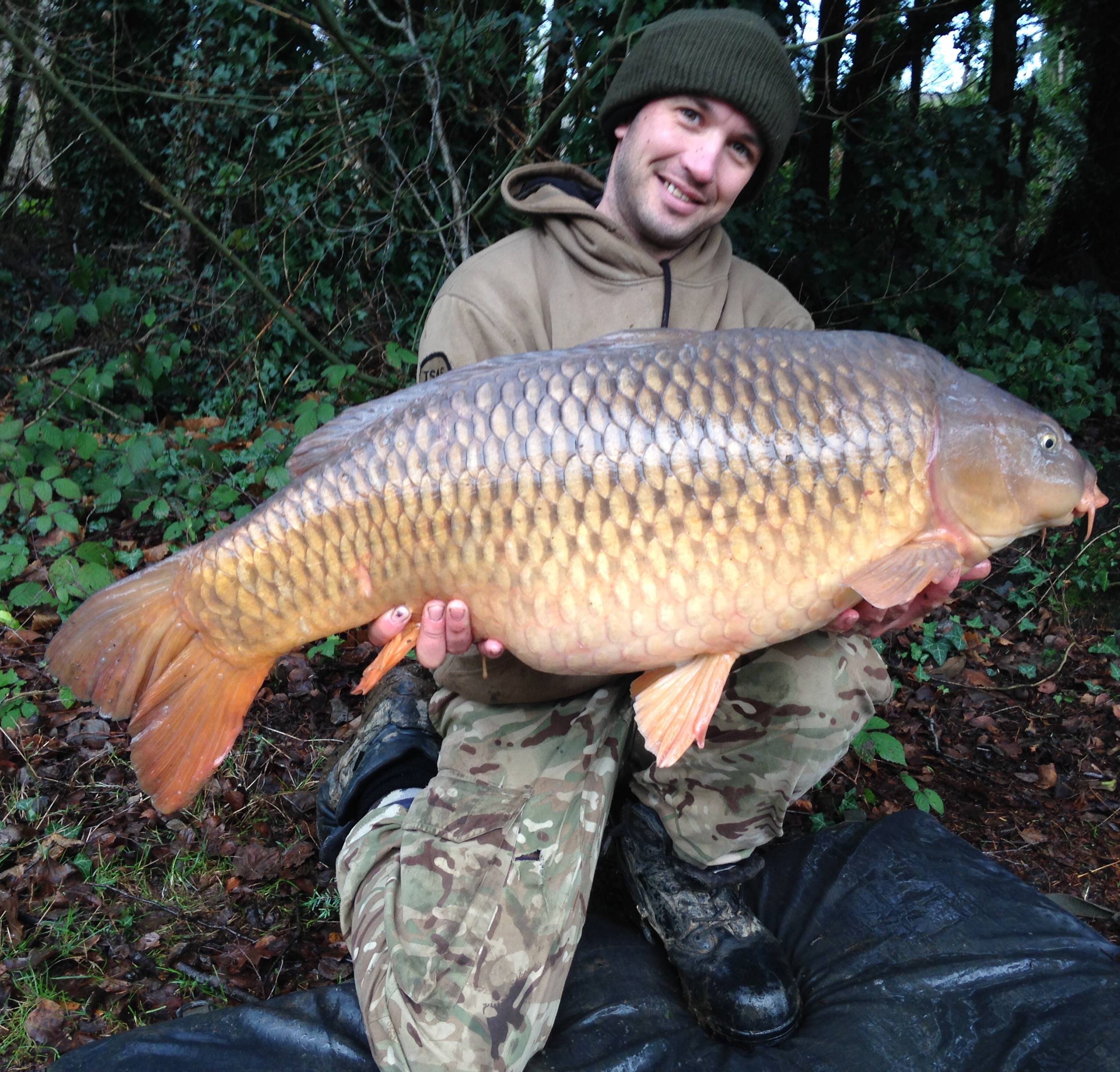
I caught a 39lb 15oz doing exactly that! Lol! I believe the larger fish once over the hookbait cannot distinguish it as being off the deck too well, especially as they can't see it when their mouths are over it and they are relying on their barbules for the final part. This fish was caught on a simple braided pop up rig in a solid PVA bag, however in my experience I find braided pop up rig, especially fished without a PVA bag/stringer can tangle more times than I'm prepared to accept. I good old hinged stiff rig has caught me stacks of carp, i have not had one tangle and the hookholds have been awesome. It's my go to pop up rig regardless of where I am. It fishes well over a clean or slightly weedy bottom but can be a bit problematic in thick weed. I never use the chod. It's a rig I don't like, and I've never had my HSL outfished by a chod anyway.
-
Knots are a personal thing, so long as you trust them. ive used a blood knot all my fishing life and had no problems. The only knot i dont trust is a simple overhand loop, i find it self strangulates and weakens. a double overhand loop is much stronger. i use grinners for seafishing though, to attach tapered shockleaders on my abu hi speed multis. but blood knots for swivels hooks etc. the thicker the mono, the less turns i find i need. normal mono = 4turns braid =6turns greased weasel (trace bodies) =3turns. experience really helps here.
-
Using a stiff fluro hook section with a braided boom section is a known rig called a reverse stiff rig. it can be prone to tangling. You can use a braided hook link with a fluro boom to make a combi presentation but in my experience, hinged stiff links are best when made out of stiff materials such as amnesia. you can of course use coated braid and peel back the amount you want the bait to pop up by, however i prefer a traditional hinged stiff link as they seem to tangle less abd kick the hookbait away from the lead on settling, especially if pva nuggets are used. i find the amnesia stiff links more versitile and less prone to tangle and they give better hookholds in my opinion. they are whats on my rods at the moment anyway!
-
I use the d rig with my stiff links. fish them over a wide variety of bottom makeups with no issues that i am aware of. find a stiff link is a good rig to use on new waters as its pretty versitile.
-
I use amnesia 15lb for all my pop up rigs, hinged stiff links. i took my first "hard" water using fluro hooklinks in late 90s. again using amnesia 15lb in clear and bottom baits. i think i had the advantage as everyone else was using supple braided hooklinks. so it was a different presentation. so id use it when no one else is.
-
I recognise those quotes - i wrote them. Damage caused when: Longshank hook peirces lip in smaller carp. Hookpoint passes clean through lip and out the other side. Smaller carp frantically swimming/jerking/headshaking Hookpoint re-hooks lip at another point. Pressure exerted pulls hookpoint home. Carp now double hooked (stitched) Pressure applied to part of mouth there hook dug in a second time - direct pressure from angler on 1st hook point - leteral/sideways pressure on 2nd. Hook tears along the lip, ripping it along until the hook ends up back, single hooked, where it started, or tears free. The bent hook rig used to do the same, as the hook flexed forwards and backwards at the point of bending during the fight making matters worse. Of the two, the 360 rig is much safer, and is a "big fish rig" so if uded correctly in the right situation for big carp (that often fight slower and less frantic then little uns) is less risky. Its not the rigs fault, its the person who choses to use it in the wrong situation. Like my job, i carry a rifle, i went round afghan with it, but my rifle itself isnt dangerous, i could walk past civvies without it bursting into gunfire, but it became dangerous when i chose to use it. I have seen mouth damage with a 360 rig and one carp is enough. I think other rigs work just as well. You would want me as your lawyer, you might not win, but i'd be cheaper!
-
Well ive repeatedly offered to make a nice pie, but no takers so far! They'll eat the wild rabbits that i shoot, but offer them rosie rabbit? Nooooo! Thats just not right...
-
You think that dog looks broken? Check out mine... Looks proper knackered! Yes, i gave her easter eggs and told my kids she is the real easter bunny...!
-
I use "tapatalk" and manage my carp.com account on my phone through tapatalk. (free app) I reply to a quote as normal and if i want to put a photo on, hit the camera pic on the toolbar, it opens my iphone gallery and i pick the photo i want. When i submit my post, it automatically updates and shows the pic. I use my iphone camera for everything, so the photos are all on there.
-
Thats awesome, well done fella.
-
There is a bit of metalwork, it is a proven rig but it needs to be used for its correct application, IE "big fish" angling. Basically, its not designed for commercials or runs waters where the average size of carp is not too small, for reasons previously mentioned. Although i have seen it "advertised" as a usual pva bag rig which would suggest that it will end up on the nearest commercial where a poor little 3lb carp will stitch itself up royally on it. The Whithy pool rig, this spins on contact as well, and has the benefits of longshanked hooks with less risk of damage. As the tubing straightens out during the fight. Its a bit of a rig to get your head around visually, it was invented by steve renyard to combat the super riggy carp at withy pool that were mouthing the baits. this is my basic pop up rig that i use all the time. the bait blows back along the shank on ejection, i have used the small bait big hook principle for years having caught many carp on it. 35lb Pb. 28lb 21lb 22lb. The most simple pop up rig here, yet had lots of 20-30's on my rig, and never felt the need to complicate it further, after all, the correct application of bait in the right swim for the prevailing conditions is far more important than some fancy over complicated rig. The most fancy all singing all dancing rig still wont catch a carp thats not there! Get the location right before worrying about "advanced" rigs, the most consistant "big fish" anglers use real simple rigs and put watercraft and location forefront in their minds.
-
The business end of the 360 ( degree) rig. (thank you fox international for the pic!) Just tie a braided hookling to the swivel ring. Gotta be a longer than average hooklink, does not work as well with short links. Personally, if i want to fish a longshanked pop up presentation, i would use the half withy rig, as it was designed to emulate the longshanked aspects but with a shortshanked hook. The hook spins in a similar fashion as the 360 rig when the curved tubing touches the lip, it spins and places the hook hopefully in the bottom lip, which is the same mechanics you are relying on with the 360 rig. As the curved longshank comes in contact with the bottom lip, with the swivel, the hook should spin 360 degrees (hence the name!) and hook in the lip.
-
No dramas!
-
Rob maylin also outlined the dangers of the bent hook rig in print too, once they became known. The 360 rig is attributed to dave lane who stated it was a "big fish" rig where the likelyhood of doublehooking/stitching the hook is less likely. Some mouth damage will be down to poor unhooking, refusal to cut the hook if required (or even not being aware this is an option, how many people truthfully think to snip a hook?) also using the 360 rig out of the context to which it was origionally designed. I think that its use on smaller fish, high stock runs waters (for which it wasnt designed) is another reason why mouth damage may be encountered. Personally i think there are other pop up rigs out there that are just as effective.
-
The 360 rig is sometimes pinned with mouth damage due to its mechanics, in the same way the long shank bent hook rig was in the 80-90s - indeed this rig was banned in many places. The long shank aspect used to "double hook" (hook through the lips multiple times, otherwise called stitching) and then tear in the carps mouth, the bent hook, if not bent correctly, would open and close at the point of bending kind of like an old fashioned can opener causing damage to the carp. The fox series 5 - the first commercially available long shanked curved hook brought in to try and emulate the success of the bent hook rig. It was found that smaller, more frantic carp could "double hook" themselves which then tore, ripping the lips. The readon shrink tube became so popular was it allowed you to fish a "bent hook" which didnt cause the damage with the hook opening and closing like a can openerin the carps mouth this is why we bend and curve shrink tube, to emulate the bent hook rig.The link has been made between the longshanked aspect and the 360 rig, it has been said (by "them") that it can cause the double hooking which leads to mouth damage. The evidence is not exactly solid, in the case of the bent hook rig, the damage and its cause was obvious, and lots of lakes banned it. The 360 rig is used by many top anglers, mr dave lane being one of them, it is seen as a "big fish rig" mostly down to the fact it utilises a longshanked hook which can hook multiple times in a smaller carps mouth. It is also designed to be fished heavily weighted as opposed to critically balanced. The idea is that the pop up spins 360 degrees and hook in the bottom lip. The use of a longshank hook has always been linked to mouth damage to smaller carp. Whether its true or not? Well thats open to speculation, the old bent hook was brutal, but the 360 rig is well popular and well used, if it was as damaging as the old bent hook rig was, then we would know by now, its been out for years, i dont use it as its too much metal in/around the hook - plus the use of a longshank puts me off a bit, as i remember the mouth damage from the 1st longshank curved hooks and bent hook rigs. I havent seen the series 5 on sale for years, although fox do sell the armapoint LSC which look near as damn it identical.
-
Time to complain!!
-
Ive had the absolute priveledge of being able to fish for carp for 19+yrs, i love all aspects of the sport, including watching and appreciating the wildlife, i dont understand the current trend for drinking on the bank, these days getting the bivvy up, tv on etc before getting on with the inconvienance of getting the rods out... I know one lad who used to set up on the pond, cast out anywhich where and retire to his bivvy for a weekend of fostors tinnies, an ounce of weed and several hard core porn magazines, you wouldnt see him from one day to the next!! Personally, i dont really care if i blank, being there is enough, remember: Take nothing but photographs, Leave nothing but footprints, Kill nothing but time... We "borrow" the swim from mother nature, we should at least return it in as good a nick as we were lent it, we owe them that, litter louts, drunks, stoners, noisey neighbours, they dont deserve to see the wildlife in the close intimate way that us anglers do. As a footnote, i have no qualms with those who enjoy a can or two on the bank, just dont kick the asre out of it!
-
Ive got several sets i could chose, but my centuries have been there through thick and thin and i feel "lost" fishing without them.
-
Many thanks buddy! Just checked it out, O...M...G...(to quote a teenage girl!) the 19" cork sleeves looks proper gucci...!
-
I was wondering if you could buy the cork and do the job myself? It seems such a simple job, and i dont have any specialist tackle shops around me who could do it for me, i dont like giving my rods to someone else either, when i had the "mature" (like it!!) blanks rewhipped, i was warned not to fish with them for about a week to let the varnish harden off and dry thoroughly, needless to say, 4hrs later ive blasted them with a hairdryer and am set up in a swim merrily angling away... Yeah, the varnish all cracked and warped and i had to strip it all off and redo it all over again...
-
Lol!! For me it still does!! :blink:
-
Yeah! Although i shouldve re-eyed the rod before giving her the push, she could have paid for them as a leaving present...
-
God damn it! Protected!!
-
I want to strip and re-eye my centuary blanks, i'd love to replace the duplon/foam handles with cork as i love cork handles. I had to get my blanks re-eyed years ago after the eyes were twisted around themselves by a rather angry ex... Well she was an ex swiftly afterwards! Sticks and stones may break my bones but keep your mitts off my carp gear!! On the plus side, at least it was the fishing type of "tackle" that she chose to twist off... :blink: